
In July 1906 a bronze statue was unveiled in the Rhondda, in the Welsh valleys, of a man who had founded a mining village near Bonnyrigg. Archibald Hood, a mining engineer born in Kilmarnock in 1823, made his name in both places.
In 1856 Hood leased Whitehill Colliery at Rosewell, and he established the village around it, building miners’ houses, each with its own garden plot. In 1878 he began a new shaft and built railway branches off the Peebles line.
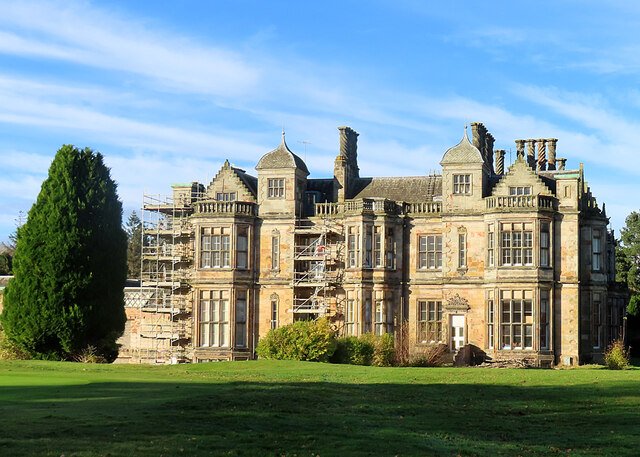
Hood later acquired Whitehill House, a mansion designed by William Burn and built between 1839 and 1844 for the Wardlaw Ramsay family. In 1890 he joined Whitehill with the Marquess of Lothian’s Newbattle pits to form the Lothian Coal Company.
He also worked in Wales. In March 1863 he sank a pit at Llwynypia in the Rhondda, where his miners’ homes became known as the Scotch Houses. Hood died in Cardiff on 27 October 1902, and his workers there paid for the bronze statue, which was the first public statue in the Rhondda.
Whitehill Colliery was nationalised in 1947. It reached peak production in 1950 and closed in 1961. Rows of former miners’ houses still line streets such as Victoria Street and Lothian Street, though we haven’t found a source that dates them.
Sources
- Wikipedia, Rosewell, Midlothian: en.wikipedia.org/wiki/Rosewell,_Midlothian
- Wikipedia, Archibald Hood: en.wikipedia.org/wiki/Archibald_Hood
- Historic Environment Scotland, listed building LB687: portal.historicenvironment.scot/designation/LB687
- Geograph, Victoria Street, Rosewell photo notes: geograph.org.uk/photo/1312468
- Geograph, Lothian Street, Rosewell photo notes: geograph.org.uk/photo/1312473
Photo credits
Photos in the video and on this page, all licensed CC BY-SA 2.0 via Geograph: Rosewell (Richard Webb); Whitehill House (Anne Burgess); Whitehill Place, Rosewell (Richard Webb); Victoria Street, Rosewell (M J Richardson); Rosewell Parish Church (Mr H); Whitehill House Chimneys (Anne Burgess); Whitehill House (Anne Burgess); Lothian Street, Rosewell (M J Richardson).